Many homeowners constantly adjust their thermostats throughout the night to fight off the sweltering tropical heat.
Our team at Billy Aircon (founded in 2003 and now a dedicated crew of 26) has seen exactly how finding the best aircon temperature for sleep in Singapore completely changes your nightly routine. It is frustrating to choose between waking up shivering at 3 a.m. and dealing with a shocking electricity bill.
We will break down exactly how to optimise your settings based on local data and hardware features. Let us examine the numbers, decode the features on your remote, and explore practical ways to stay comfortably cool.
The Ideal Temperature for Sleep: 24-26°C
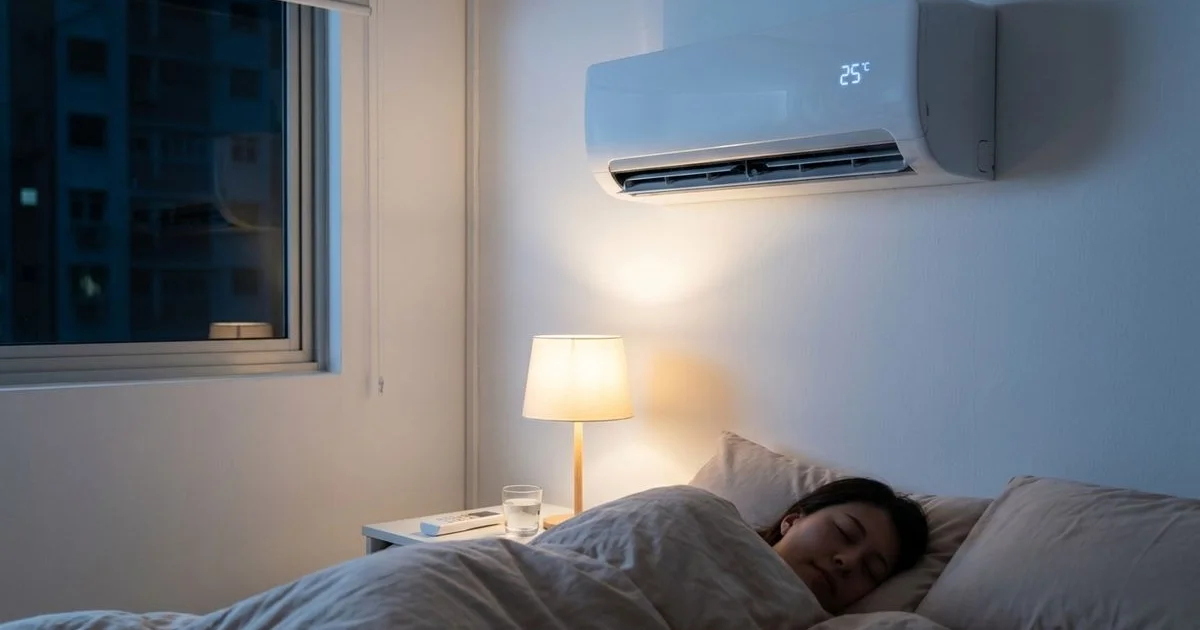
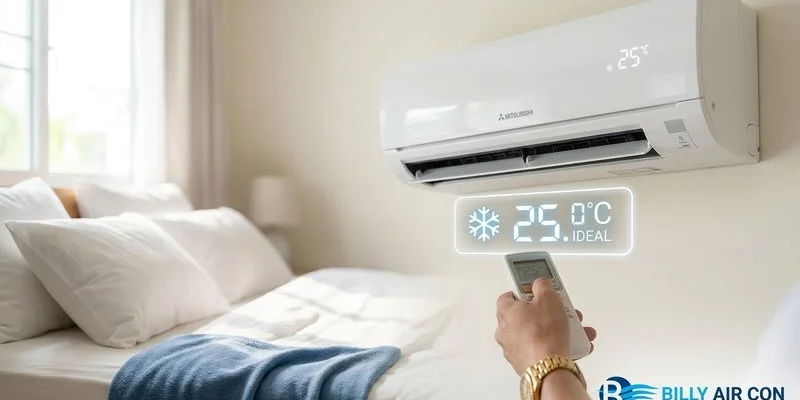
Sleep researchers consistently recommend a room temperature between 24°C and 26°C for optimal rest. The National Environment Agency (NEA) actively promotes 25°C as the perfect balance for comfort and energy efficiency.
Our technicians frequently notice that households setting their thermostats much lower end up overworking their compressors unnecessarily. The human body naturally drops its core temperature by about 1°C to 2°C during the initial stages of sleep. A moderately cool room facilitates this biological process beautifully.
We suggest using 25°C as your baseline starting point. A room kept at this level feels pleasant under a light duvet, preventing the midnight chills that disrupt your rapid eye movement (REM) cycles.
| Temperature | How It Feels | Best For |
|---|---|---|
| 22-23°C | Cold (requires thick blanket) | People who run very hot |
| 24°C | Cool and comfortable | Light sleepers and couples |
| 25°C | Ideal for most | General NEA recommendation |
| 26°C | Mildly cool | Energy-conscious households |
| 27°C+ | Warm and humid | Too warm for deep sleep |
You can easily test this by raising your current setting by just one degree tonight. Our clients often report that a shift from 23°C to 25°C goes unnoticed in terms of comfort but produces a visible drop in their monthly utility expenses.
How Sleep Mode Actually Works
Modern cooling units feature specialized sleep modes built to prevent overcooling while you rest. The technology behind this function makes micro-adjustments to the compressor and fan speed.
Our experience shows that many users ignore this button, assuming it simply turns the machine off after a few hours. The reality is far more sophisticated.
Gradual Temperature Increase
Activating sleep mode prompts the system to gently raise the set temperature by 1°C to 2°C over a period of several hours. Panasonic models, for instance, typically drop the temperature slightly at first to help you fall asleep, then slowly increase it by 1°C per hour.
We highly recommend this automated adjustment because it aligns perfectly with your circadian rhythm. During deep sleep, your body becomes less sensitive to environmental shifts. The room warms up slightly just as you enter lighter sleep stages, preventing you from waking up shivering.
Lower Fan Speed
This setting also drops the fan rotation to its quietest operational level. The World Health Organization (WHO) suggests keeping bedroom noise below 30 decibels for undisturbed rest.
Our installations of modern ductless mini-splits show they can operate at a whisper-quiet 20 to 25 decibels on low fan settings. A steady, quiet hum fades into the background, eliminating the disruptive noise of a compressor constantly cycling on and off.
Energy Savings
Running your unit with adjusted temperature and reduced fan speed translates to a massive reduction in power consumption overnight. Singapore’s SP Group set the household electricity tariff at 26.71 cents per kWh (before GST) for the first quarter of 2026.
“Running an air conditioner on sleep mode can reduce overnight power consumption by up to 30%, making a noticeable difference in quarterly electricity bills.”
We calculate that saving even a fraction of a kilowatt-hour every night quickly adds up to significant savings on your monthly bill. This makes energy efficiency effortless.
How to Activate Sleep Mode
Look for a button labelled with a moon or star icon on your controller. Some advanced systems use different terminology for their smart night features:
- Daikin: Good Night mode (or Intelligent Eye, which actively adjusts cooling if no movement is detected)
- Mitsubishi Heavy Industries: Sleep Timer
- Panasonic: Sleep Mode or ECONAVI
- LG: Sleep mode
- Samsung: Good Sleep mode
Timer Settings: The Smart Alternative
Not every air conditioning unit includes an automated sleep function, making manual timers your next best option. A well-planned schedule prevents your compressor from running needlessly while you are deep asleep.
Our service teams see wildly different usage patterns across different property types in Singapore. The layout of your home and the specific insulation of your room dictate which strategy works best.
Strategy 1: Run All Night (Most Common)
Setting the thermostat to 25°C and letting it run from 10 p.m. to 7 a.m. remains the most popular choice. This approach guarantees uninterrupted comfort throughout the entire night.
We estimate that running a standard 9,000 BTU unit for nine hours at this temperature costs roughly $60 to $80 per month, based on the early 2026 SP Group tariffs. This remains an affordable luxury for many families.
Strategy 2: Cool and Coast
Program your system to cool at 24°C, but set an off-timer for three to four hours after you go to bed. The enclosed space will gradually warm up after the machine powers down.
Our technicians suggest evaluating your room before using this method:
- Best for: Well-insulated, lower-floor HDB flats that retain their chill.
- Not ideal for: Top-floor units or bedrooms facing the afternoon sun.
Strategy 3: Delayed Start
Many people spend an hour reading or scrolling on their phones before actually trying to sleep. Set a one-hour on-timer, leaving the aircon off initially while you use a standing fan.
We find this strategy perfectly times the arrival of cold air with the moment you are ready to close your eyes. It prevents wasting energy while you are still awake.
Strategy 4: Split the Night
Program the unit to run from 10 p.m. to 2 a.m., then use an on-timer to restart it from 5 a.m. to 7 a.m. This tactic completely skips the naturally cooler hours of the early morning.
Savings Tip: Splitting the night can trim your overnight cooling costs by up to 40% while still delivering cold air right when you need it most.
Humidity Matters More Than You Think
Temperature only tells half the story of a comfortable bedroom. The Meteorological Service Singapore (MSS) reports that our annual average outdoor relative humidity sits at a staggering 84%, often peaking above 90% in the early mornings.
Human bodies cool down through the evaporation of sweat, a process that completely stalls when the surrounding air is already saturated with moisture. A room sitting at 27°C feels much warmer and stickier if the relative humidity exceeds 80%.
We advise aiming for an ideal indoor humidity level of 50% to 55% in your bedroom to prevent mould growth and deter dust mites. Controlling this moisture is vital for health.
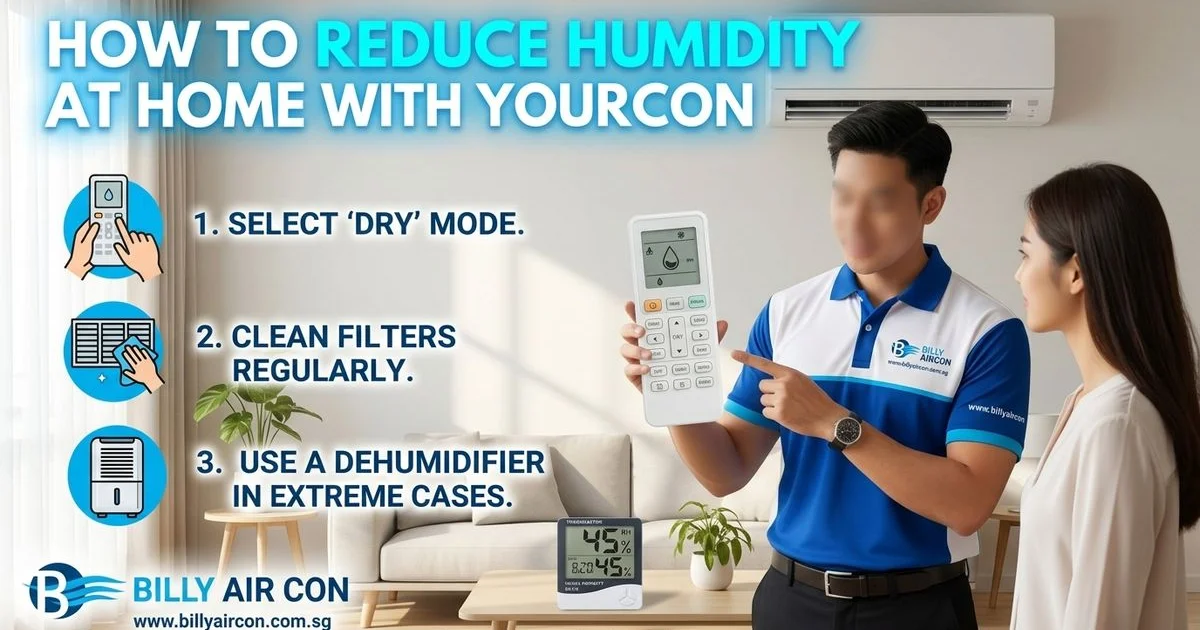
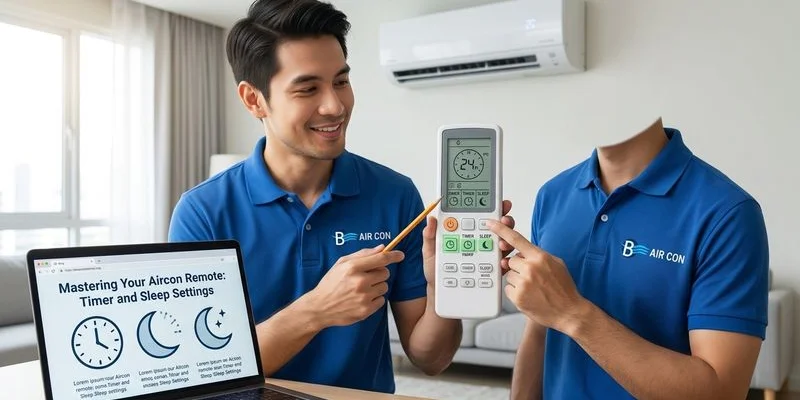
- Dry mode for pre-cooling: Switch your remote to dry mode for 30 minutes before bedtime to extract excess moisture without freezing the room.
- Keep doors and windows sealed: Leaving the bedroom door ajar allows damp air from the kitchen or bathrooms to flood in, forcing the compressor to work harder.
- Address dripping units immediately: A leaking machine often points to a clogged drainage pipe or dirty filters, which drastically reduces its ability to dehumidify.
Fan Speed Settings for Night
Leaving the fan on its automatic setting is a common habit, but manual control provides a much better sleeping environment. The fluctuating noise of an auto-adjusting fan can easily pull you out of a light sleep phase.
Our installation experts recommend taking control of your airflow to match your specific room dimensions and personal noise tolerance. Finding a consistent sound level prevents jarring disruptions.
- Low fan speed: This setting generates the least noise and works perfectly for smaller bedrooms under 150 square feet.
- Medium fan speed: A solid middle ground that pushes cold air across larger rooms while maintaining a steady, acceptable background hum.
- Auto mode: The machine actively changes speeds based on the ambient temperature, which sometimes creates distracting acoustic shifts.
- Turbo for pre-cooling: Blast the highest fan setting for 15 minutes before getting under the covers, then manually drop it to low.
How to Save Electricity While Sleeping Cool
Keeping a compressor running for eight hours every night requires a substantial amount of electricity. Small adjustments to your habits and your hardware can dramatically lower your monthly utility statements.
Our clients are often surprised to learn that achieving better sleep does not require a massive energy budget. Efficiency is all about smart operation.
1. Every Degree Counts
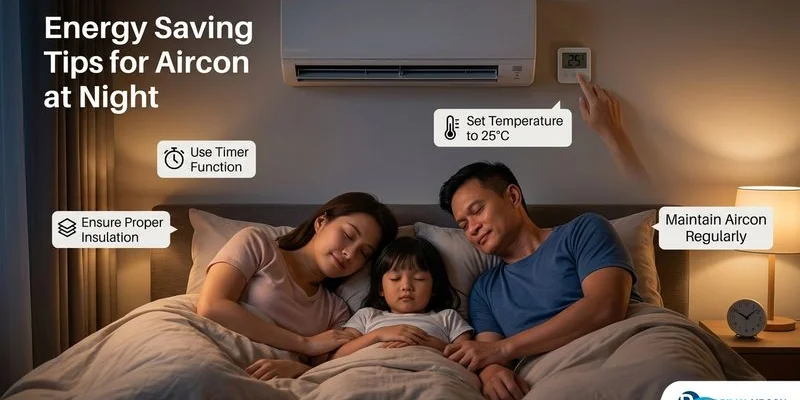
Increasing your thermostat by a single degree lowers energy consumption by approximately 5% to 8%. Shifting your nightly setting from 23°C to 25°C yields a noticeable 10% to 15% drop in running costs.
2. Use a Fan Together with Aircon
A ceiling or standing fan actively circulates chilled air, making a 26°C room feel like a crisp 24°C.
| Cooling Method | Expected Comfort Level | Estimated Monthly Add-On Cost |
|---|---|---|
| Aircon at 26°C + Fan | High (Crisp and breezy) | $2 to $3 |
| Aircon at 24°C (No Fan) | High (Cold and still) | Significantly higher |
We always encourage combining both appliances, as the savings from a higher thermostat setting easily outweigh the minimal cost of operating a fan. This dual approach maximizes airflow.
3. Close Curtains Before Sunset
Bedrooms facing west absorb intense solar radiation throughout the late afternoon. Drawing thick blackout curtains before sunset blocks this thermal energy from baking your walls and floors.
Our heat-load assessments prove that shaded rooms require far less power to cool down once the sun sets. The air conditioner reaches its target temperature much faster.
4. Keep Filters Clean
Dust accumulation forces the blower motor to strain against restricted airflow. Clean filters ensure:
- Unrestricted airflow from the blower motor.
- Up to 15% reduction in electricity consumption.
- Fewer allergens circulating in your bedroom.
5. Service Your Aircon Regularly
Systems burdened with dirty evaporator coils, blocked drain pans, or low refrigerant gas cannot transfer heat efficiently. Professional aircon servicing ensures the internal components operate smoothly, keeping your energy bills firmly in check. Check our servicing price list for transparent rates on all maintenance packages.
6. Choose an Inverter Unit
Traditional non-inverter compressors operate on a rigid stop-start cycle that consumes massive amounts of power. Modern inverter technology smoothly adjusts the motor speed to maintain the target climate, cutting overnight usage by 30% to 50%.
We frequently see homeowners recover the cost of a new inverter upgrade within two to three years through sheer electricity savings. The technology pays for itself rapidly.
7. Check Your Aircon’s Energy Rating
The National Environment Agency uses a green tick system to grade appliance efficiency in Singapore. Upgrading from a basic 2-tick model to a 5-tick unit drastically reduces the financial impact of running your machine all night.
Common Mistakes That Ruin Sleep Quality
Even the most expensive hardware will fail to deliver a good night’s rest if it is used incorrectly. Certain widespread habits actually sabotage your comfort and impact your physical health.
Our service teams frequently correct these basic operational errors during routine house calls. Simple changes yield massive improvements.
Setting the Temperature Too Low
Dialling the thermostat down to 18°C forces the system to strip almost all the moisture from the air.
Health Warning: Medical professionals caution that excessively dry air irritates the respiratory tract, causing morning sore throats and dry eyes.
We advise avoiding these extreme settings, as they also cause your muscles to tense up and stiffen during the night. A moderate temperature supports true relaxation.
Pointing the Airflow Directly at Yourself
A continuous blast of cold air aimed right at your bed guarantees you will wake up with cramps or a stiff neck. Adjust the directional louvres so the draft travels along the ceiling and cascades gently down the walls.
Ignoring a Noisy Unit
Grinding, rattling, or high-pitched whining noises indicate failing bearings or a struggling fan motor. Ignoring these mechanical warnings disrupts your sleep architecture and often leads to expensive repairs later. Look out for:
- Grinding: Points to failing motor bearings.
- Rattling: Suggests loose internal components.
- High-pitched whining: Often indicates compressor issues.
Sleeping with the Bedroom Door Open
Leaving your door wide open creates a massive thermal leak. The machine will run its compressor continuously in a futile attempt to cool the hallway and living room, wasting energy and accelerating component wear.
The Bottom Line
Securing the best aircon temperature for sleep in Singapore requires a simple combination of the right settings and basic room preparation. Setting your remote between 24°C and 26°C, activating the automated sleep features, and managing room humidity creates an ideal environment for deep rest.
Our team knows that well-maintained equipment operates quietly and efficiently, keeping both your bedroom cool and your power bills low. A machine that rattles or fails to reach the target temperature usually needs professional attention to restore its performance.
Need help optimising your aircon for better sleep? WhatsApp Billy Aircon at +65 9187 4498, and our experienced technicians will happily service any brand across Singapore.