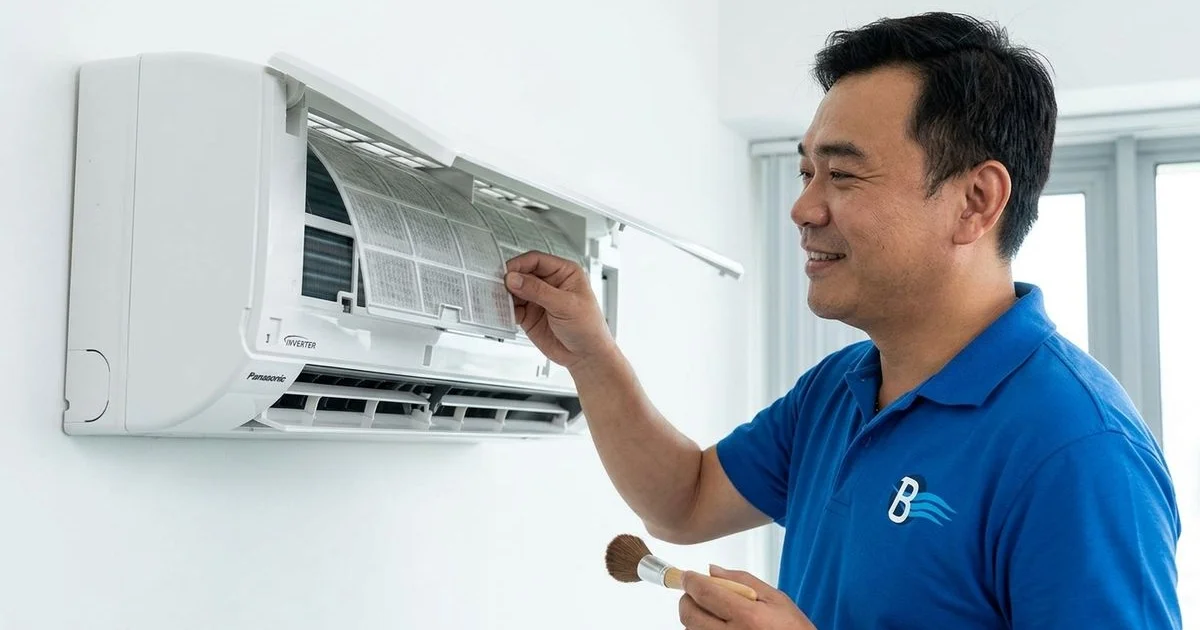
Why Singapore Homes Trust This Brand
Panasonic has been a trusted household name in Singapore for decades, and their aircon systems are a popular choice across HDB flats, BTO units, condos, and landed properties island-wide. Known for Japanese engineering quality and practical innovation, Panasonic aircons offer features specifically designed for tropical climates like Singapore’s. Their nanoe-G air purification technology and Econavi intelligent sensor system set Panasonic apart from many competitors by addressing both comfort and indoor air quality.
Billy Aircon, a fully licensed aircon servicing company in Singapore with over 20 years of experience and a 26-person team, services Panasonic aircon units throughout Singapore on a daily basis. Our technicians have hands-on experience with the full Panasonic lineup, from basic CS/CU wall-mounted systems to premium models with nanoe-G and Econavi features. We understand how these proprietary technologies work and how to maintain them properly, ensuring your Panasonic aircon delivers the clean, efficient cooling it was designed to provide.
Panasonic has transitioned most of its newer models to R32 refrigerant, which is more energy efficient and has a lower environmental impact than the older R410A. Our technicians are certified to work with both R32 and R410A, and we carry the correct tools and gauges for each refrigerant type.
Panasonic Models We Service
Billy Aircon services every Panasonic aircon model sold in Singapore, whether current or discontinued. Here are the systems we work on most frequently.
Panasonic nanoe-G Models
Panasonic’s nanoe-G technology is an air purification system that generates nano-sized electrostatic atomised water particles. These particles are released into the room to inhibit bacteria, viruses, and allergens in the air and on surfaces. The nanoe-G generator is a small component inside the indoor unit that requires periodic cleaning and inspection to maintain its effectiveness. During servicing, we clean the nanoe-G device, check that it is generating ions correctly, and remove any dust accumulation that could block the particle release path. A poorly maintained nanoe-G module will not purify air effectively, defeating the purpose of choosing this premium feature.
Panasonic Econavi Sensor Models
The Econavi system uses dual human activity and sunlight sensors to detect room occupancy and ambient light conditions. When the room is empty or when natural light reduces the cooling load, Econavi automatically adjusts the compressor speed to save energy. These sensors need to be kept clean and unobstructed for accurate detection. During servicing, we wipe down the sensor lenses, verify their functionality by testing the response to movement and light changes, and recalibrate if necessary.
Panasonic CS/CU Series
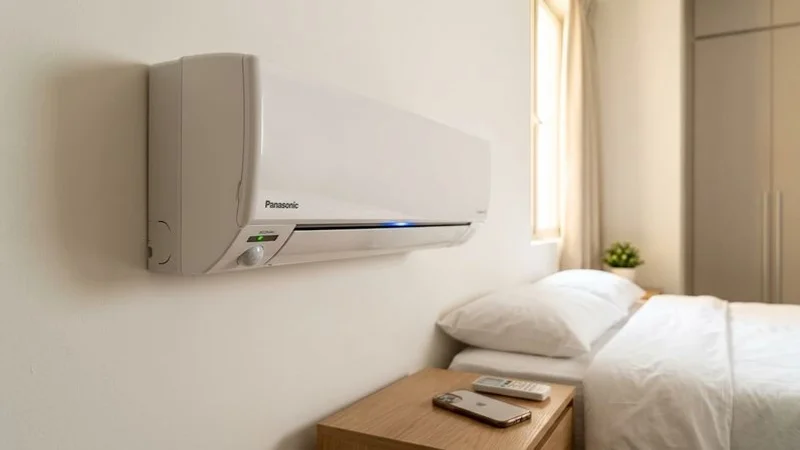
The CS (indoor) and CU (outdoor) model designations form the backbone of Panasonic’s aircon range. The CS unit houses the evaporator coil, fan blower, air filter, and control electronics, while the CU outdoor unit contains the compressor, condenser coil, and expansion valve. These units come in various capacities suited for different room sizes common in Singapore - from compact 9,000 BTU units for HDB bedrooms to larger 24,000 BTU systems for condo living rooms. We service all CS/CU models and understand the specific characteristics of each capacity rating.
Panasonic Multi-Split Systems
Panasonic’s multi-split systems connect two to five indoor units to a single outdoor compressor. These are commonly installed in Singapore condos and HDB apartments, from newer BTO estates in Punggol and Sengkang to established blocks in Bedok and Ang Mo Kio. The system uses a branch box to distribute refrigerant to each indoor unit. Multi-split servicing requires checking each indoor unit individually and verifying balanced refrigerant flow. An issue with one indoor unit can affect the performance of all connected units, which is why thorough multi-point inspection is critical.
Common Aircon Issues in Tropical Climates
Singapore’s hot, humid tropical climate puts constant stress on aircon systems. Here are the Panasonic-specific issues we encounter most often.
Water Leaking from Indoor Unit
Water dripping from a Panasonic indoor unit is our most common service call for this brand. Singapore’s humidity causes heavy condensation on the evaporator coil, and the drain system must handle this volume continuously. When algae and slime block the drain pan outlet or the drain hose, water backs up and overflows from the unit. We thoroughly flush the entire drainage system, apply anti-bacterial treatment to slow biological regrowth, and check that the drain pan is correctly positioned beneath the coil.
Panasonic Aircon Not Cold
When your Panasonic aircon is not blowing cold air, there are several common culprits. A dirty evaporator coil covered in dust and grime reduces the coil’s ability to absorb heat from the air. Low R32 or R410A refrigerant due to a leak in the copper piping means the system is unable to transfer enough heat energy. A malfunctioning Econavi sensor might incorrectly read the room as unoccupied and reduce compressor speed. Our technicians check each component systematically to identify and fix the real cause.
Panasonic Error Codes
Panasonic aircons display error codes through flashing LED patterns on the indoor unit or via messages on the remote control display. Common codes include H11 (communication error between indoor and outdoor units), H16 (current transformer fault), F90 (PFC circuit protection), and H19 (fan motor locked). When you contact us with a Panasonic error code, we can often narrow down the problem before arriving, allowing us to bring the right parts for a first-visit resolution.
nanoe-G Not Working
If you notice that your Panasonic aircon’s nanoe-G function is no longer reducing odours or improving air quality, the nanoe-G generator module may be dirty, worn out, or malfunctioning. The module has a limited lifespan and may need replacement after several years of continuous use. We test the nanoe-G output during servicing and advise on replacement if the module is no longer producing ions effectively.
Econavi Sensor Malfunction
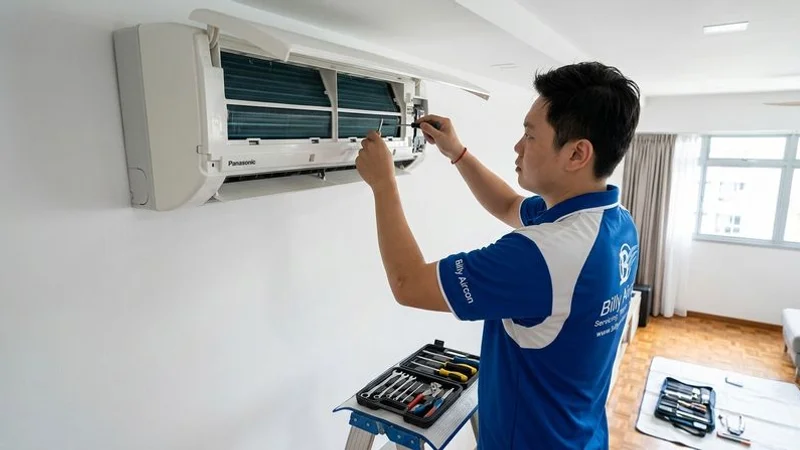
When the Econavi sensor malfunctions, it can cause erratic aircon behaviour - the unit may ramp down cooling when the room is occupied or fail to adjust when the room is empty. This leads to uncomfortable temperatures and wasted electricity. Dust covering the sensor lens is the most common cause, which is resolved during standard servicing. If cleaning does not fix the issue, the sensor module may need replacement.
Unusual Odours
Musty or sour smells from a Panasonic aircon are caused by mould and bacteria growing on the wet evaporator coil and drain pan. This is particularly common in Singapore, where the high humidity creates ideal conditions for microbial growth. Standard servicing helps prevent odour buildup, but if smells persist, a chemical wash is needed to eliminate the deep-seated biological contamination.
Servicing Experience Across Singapore
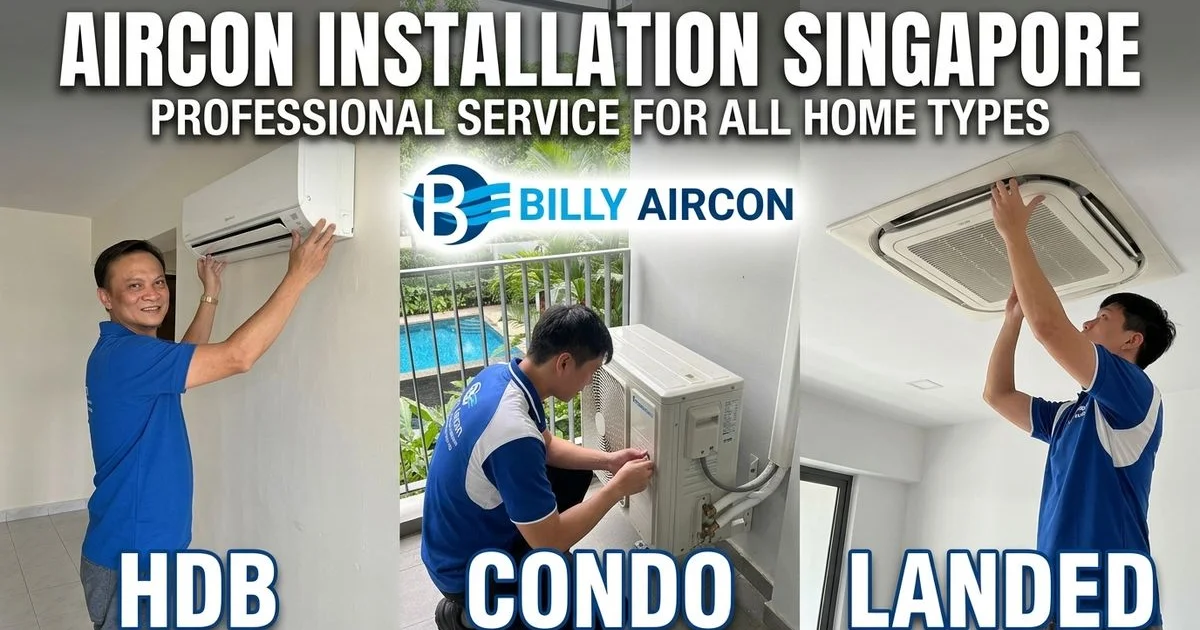
Billy Aircon’s technicians have extensive experience with Panasonic aircon systems across Singapore. We service these units in every type of property - HDB flats in Toa Payoh and Jurong, condos in Orchard and Marina Bay, landed houses in Bukit Timah and Serangoon, and offices in the CBD and industrial estates. This broad experience means we have encountered and resolved virtually every Panasonic aircon issue that Singapore’s climate can produce.
We maintain stock of common Panasonic replacement parts, including thermistors, fan motors, PCB boards, capacitors, nanoe-G generator modules, and Econavi sensor units. Having these parts readily available allows us to complete most repairs in a single visit. For specialised components, we source from Panasonic Singapore’s authorised supply network.
Our technicians understand the interaction between Panasonic’s inverter technology and Singapore’s power grid. We check supply voltage during diagnostics, as voltage fluctuations - more common in older HDB estates - can affect inverter board reliability and compressor performance.
How Much Does Servicing Cost?
We offer a full range of servicing options for Panasonic aircon units at competitive prices.
Standard Servicing - from $16 per unit (10+ units) (2026 Pricing)
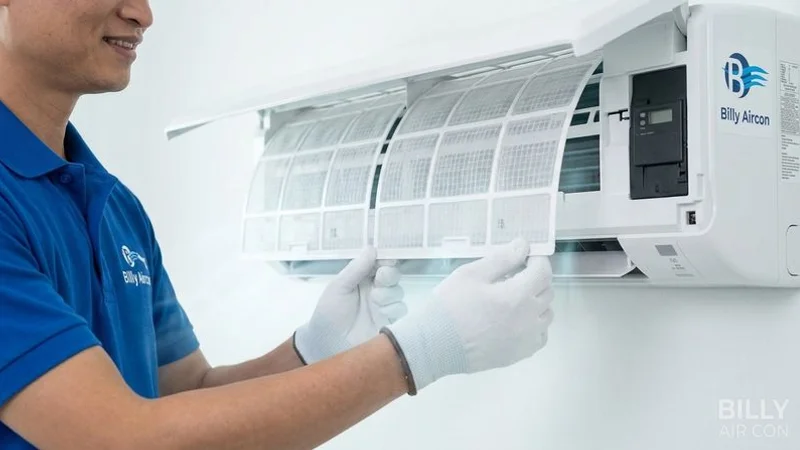
Standard Panasonic servicing includes filter cleaning, evaporator coil cleaning, drain pan flushing, condensate pipe clearing, nanoe-G module cleaning (if equipped), Econavi sensor cleaning (if equipped), and outdoor unit inspection. We check the supply and return air temperatures to verify cooling performance. This service is recommended every 3 months for Singapore homes, whether you live in a Tampines HDB flat or a Bukit Timah landed house.
For our complete pricing breakdown, visit the servicing price page.
Chemical Wash - $80 to $100 per Unit
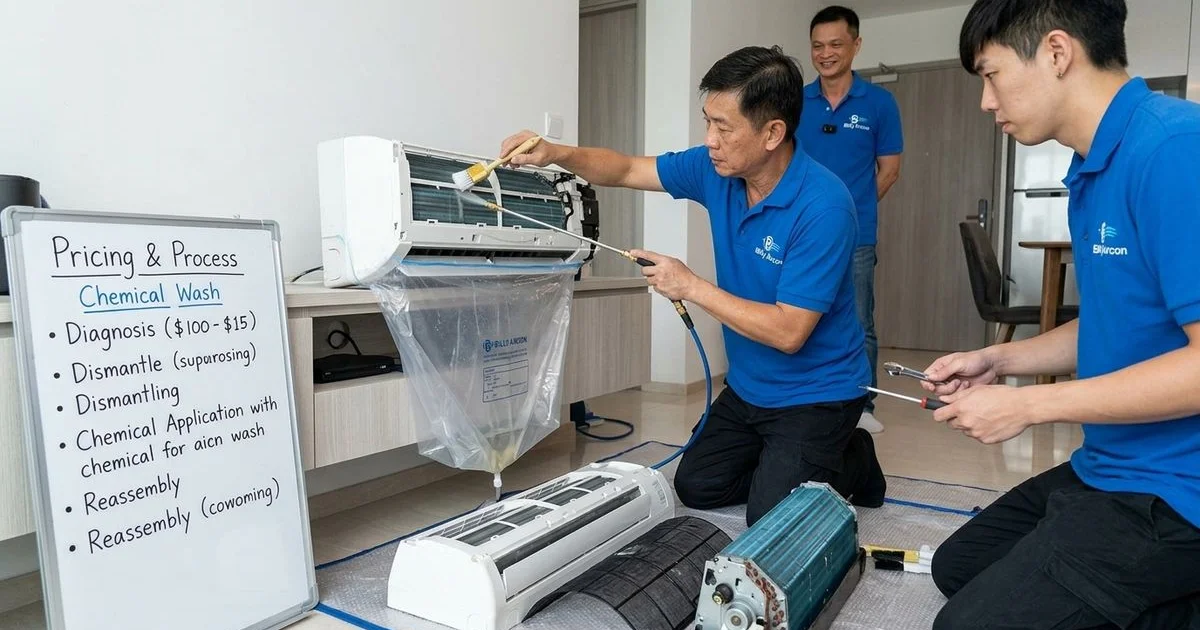
A chemical wash provides a thorough deep clean for Panasonic units that standard servicing cannot fully restore. Chemical solutions dissolve stubborn mould, bacteria, and grime embedded in the evaporator coil’s aluminium fins and on the fan blower blades. This is recommended for units that have not been serviced in over 6 months or that produce persistent musty odours despite regular servicing.
Gas Top-Up - From $80
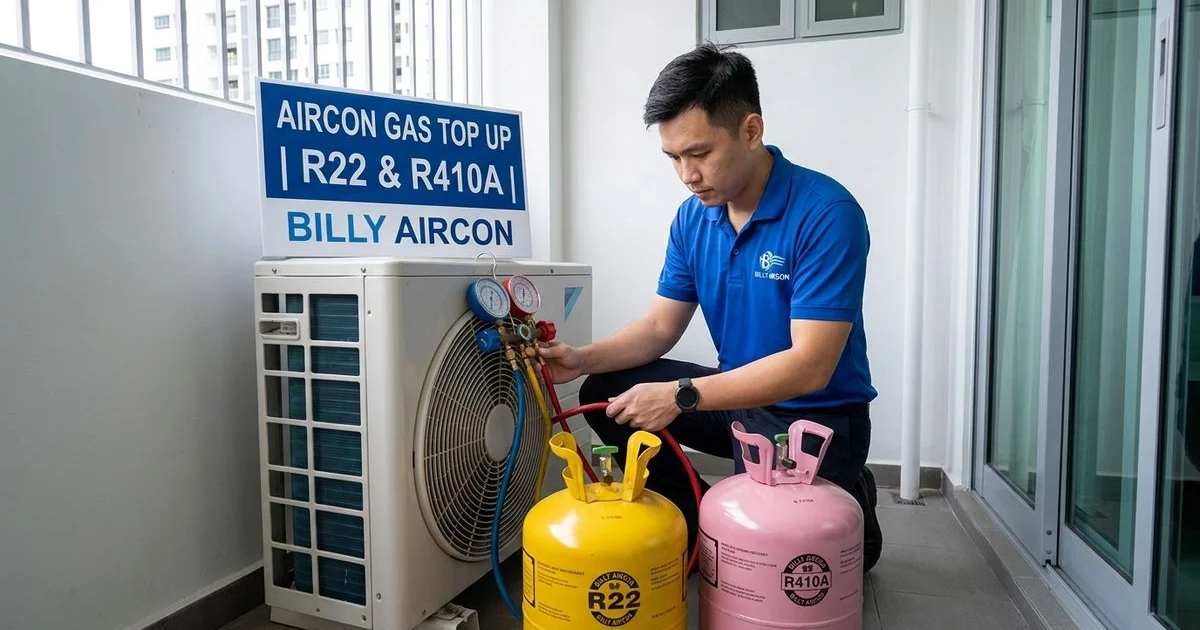
If your Panasonic aircon is low on R32 or R410A refrigerant, we provide professional gas top-up services. We use calibrated digital gauges specific to the refrigerant type in your system. A leak test is always performed before adding gas, as topping up a leaking system is a waste of money and only provides temporary improvement.
Repairs and Parts Replacement
We handle all Panasonic aircon repairs, from fan motor and thermistor replacements to PCB board diagnostics and compressor assessment. We also replace nanoe-G generator modules and Econavi sensor units when they reach end of life. All repairs include a 90-day workmanship warranty on parts and labour (2026 rates).
How We Compare
| Feature | Typical Provider | Billy Aircon |
|---|---|---|
| nanoe-G module cleaning | Often skipped | Included in every service |
| Econavi sensor calibration | Extra charge | Included at no extra cost |
| R32 refrigerant certified | Not always | All technicians certified |
| Service warranty | 30 days or none | 90-day workmanship warranty |
| Response time | 2-3 days | 24-hour response |