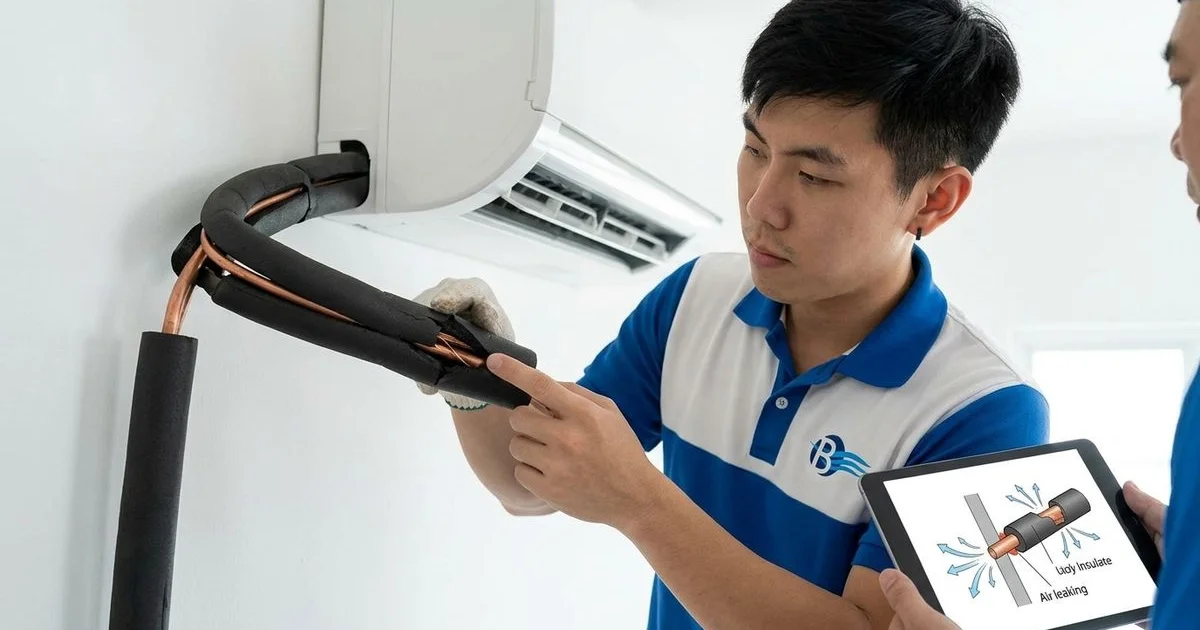
We often see property owners overlook the black or grey foam wrapped around their cooling pipes until a massive leak happens. Reading up on Aircon Insulation: Why It Matters & Signs of Damage is the best way to protect your system from Singapore’s harsh 83-87% average humidity. Without this protective barrier, condensation drips down your walls, and mould starts thriving in hidden corners.
Our team knows that a minor failure here quickly escalates into a costly repair. Since Billy Aircon started with just five people offering aircon servicing in Singapore in 2003, we have grown to a dedicated team of 26 by helping property owners solve these exact cooling problems.
Let’s look at the data, what it actually tells us about system efficiency, and then explore a few practical ways to respond.
What Aircon Insulation Does
Aircon insulation wraps directly around the refrigerant lines connecting your indoor blower to the outdoor condenser. These copper pipes carry the cold gas that absorbs heat from your room and releases it outside. The suction pipe, which is the larger of the two, carries low-pressure refrigerant back to the compressor at temperatures as low as 5°C to 10°C.
We rely on this foam covering to perform three critical functions.
1. Prevents Condensation
Moisture from the air condenses immediately when a cold pipe is exposed to Singapore’s sticky climate. Consider a glass of ice water sitting on a table outdoors. Uninsulated cold refrigerant pipes will sweat continuously, dripping water onto your walls, floors, and ceilings.
Our technicians frequently handle dispute cases caused by this exact issue. To put this into perspective, Parliament revealed in early 2026 that the Housing and Development Board (HDB) received 240 complaints in a single year just about neighbour condensation and mould disputes.
2. Maintains Cooling Efficiency
Insulation acts as a powerful thermal barrier against ambient heat. The cold refrigerant absorbs heat from the surrounding air as it travels through exposed pipes. This forces the gas to arrive at the indoor unit much warmer than intended, significantly reducing the cooling capacity.
We always warn clients about the financial impact of this thermal loss. Studies demonstrate that poorly insulated pipes reduce cooling efficiency by 10% to 20%. Your compressor works harder to compensate, wasting expensive SP Group electricity just to reach the National Environment Agency (NEA) recommended temperature of 24°C to 26°C.
3. Prevents Pipe Corrosion
Copper pipes inevitably corrode when exposed to constant moisture over extended periods. Condensation on bare pipes creates a permanently damp surface. This trapped moisture causes the copper to oxidise, weaken, and eventually develop tiny pinhole leaks.
Our installation crew highly recommends pairing good insulation with proper copper thickness. Using SWG22 copper pipes, which have a 0.71mm thickness, offers far better durability against corrosion than the thinner SWG23 alternatives. Replacing corroded copper piping is vastly more expensive than simply updating the foam sleeve.
Types of Aircon Insulation
Understanding your material options is the first step to a long-lasting cooling setup. We encounter several different materials during daily maintenance rounds across Singapore.
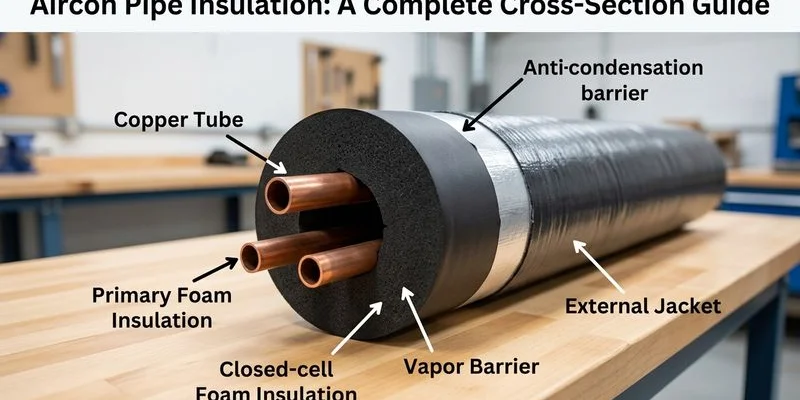
Closed-Cell Foam (Armaflex & Superlon)
The vast majority of residential installations in Singapore use elastomeric closed-cell foam. Brands like Armaflex and Superlon dominate the market for good reason.
Our preferred setup involves upgrading from the old 3/8-inch (9mm) standard to a thicker 1/2-inch (13mm) profile. Key properties include:
- Thermal conductivity: Exceptionally low, preventing unwanted heat transfer.
- Moisture resistance: The closed-cell structure completely blocks water absorption.
- Flexibility: Easily bends around tight trunking corners and fittings.
- Lifespan: Lasts 5 to 10 years, depending on direct sunlight exposure.
This material comes in a convenient tube form that slides right over the copper line.
Polyethylene Foam
A cheaper alternative to premium rubber foam is polyethylene. Installers often use this rigid material in budget-focused projects.
We rarely recommend this option for long-term residential use. It degrades rapidly under high heat and typically requires replacement every 3 to 5 years in our tropical climate.
Rubber Foam
Natural or synthetic rubber compounds offer excellent performance similar to elastomeric options. Installers frequently use this for indoor pipe runs where sunlight exposure is minimal.
Our main concern with basic rubber foam is its vulnerability to ultraviolet (UV) radiation. It will break down fast if placed on an external facade without a protective wrap.
Fibreglass Insulation
Commercial and industrial applications sometimes utilize fibreglass wrapping. This material provides outstanding thermal retention in climate-controlled environments.
We avoid using fibreglass for typical residential properties. It absorbs moisture like a sponge if the outer vapour barrier tears, making it totally unsuitable for exposed outdoor piping in high-humidity zones.
Aircon Insulation: Why It Matters & Signs of Damage
Foam sleeves do not fail overnight. The material degrades gradually, making the warning signs much more obvious over a few seasons. Here is exactly what you should monitor.
1. Water Dripping from Pipes
The most immediate red flag is water forming directly on the lines. You have a compromised barrier if you see droplets on the copper or water trails running down the wall beneath the trunking.
Our technicians always check the entire run from the indoor blower to the exterior wall exit. Even a tiny 1cm gap in the foam will cause severe, localized condensation.
2. Visible Cracks or Gaps
Walk along the trunking path and inspect the surface closely. Common physical defects include:
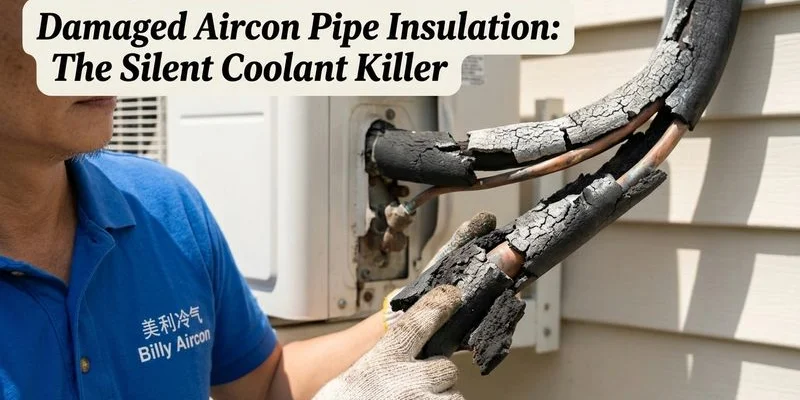
- Longitudinal cracks: The foam splits open due to prolonged sun exposure.
- Joint separation: The adhesive fails, widening the gap between two joined pieces.
- Missing chunks: Pests tear pieces away, or sections simply fall off.
- Compressed zones: Tight cable ties squeeze the foam, ruining its thermal resistance.
We suggest using a flashlight to check the hidden sections behind your compressor.
3. Hardened or Crumbly Insulation
Fresh elastomeric material feels soft and highly flexible. Degraded foam becomes hard, brittle, and dusty to the touch.
Our team replaces countless crumbly outdoor sections every month. UV radiation destroys the molecular structure, turning effective foam into useless dust that flakes away when handled.
4. Discoloured or Greenish Patches
Dark green or black patches indicate active algae or mould infestations. This biological growth confirms that moisture has fully penetrated the barrier.
We treat this as a sign of complete failure, even if the exterior looks intact. Trapped water likely saturates the material inside, meaning it transfers heat instead of blocking it.
5. Higher Electricity Bills
A sudden spike in your SP Group utility bill often points to efficiency losses. The compressor runs harder and much longer to compensate for the thermal leakage.
Our energy audits frequently link high bills to bare copper lines.
6. Wall Stains and Paint Peeling
Yellow or brown water stains on your plaster are clear indicators of a long-term leak. The continuous dripping causes paint to bubble, plaster to soften, and structural damage to spread.
We regularly see these stains lead to stressful neighbour disputes in strata-titled properties. If your bare pipes run through a shared ceiling space, the condensation will eventually ruin the ceiling of the unit directly below yours.
What Causes Insulation Damage
Several environmental and mechanical factors accelerate the breakdown process.
UV Degradation
Direct sunlight acts as the absolute worst enemy for standard foam. UV rays break down the chemical bonds, causing the surface to harden, split, and disintegrate.
Our climate ensures that unprotected outdoor sections face intense, year-round sun exposure. Standard foam without a protective UV-resistant coating will often crumble in just two to three years.
Age and Wear
Every material has a natural expiration date. The foam slowly loses its elasticity and insulating properties even inside a dark, air-conditioned room.
We find that most top-tier brands rate their closed-cell products for about 7 to 10 years. Actual longevity depends heavily on ambient room temperatures and usage frequency.
Pests and Wildlife
Local wildlife often targets soft building materials. Birds pull pieces away for nesting, while rats chew right through the trunking to access the warm spaces behind it.
Our repair crews frequently spot Javan mynahs pecking at exposed exterior foam in residential estates.
Improper Installation
Poor workmanship guarantees an early failure. Installers who use the wrong tube diameter, skip the adhesive, or leave joints completely open are setting the system up for massive condensation.
We always comply with Building and Construction Authority (BCA) standards to prevent this. Budget contractors who rush the job and skip protective outdoor tape usually cause leaks within 24 months.
Chemical Exposure
Certain household cleaners and aerosol sprays easily dissolve foam compounds. Spraying strong insecticides directly onto the trunking will melt the protective barrier.
We advise keeping harsh chemical solvents far away from any exposed cooling lines.
When to Replace Aircon Insulation
You must take action before a minor drip causes major plaster damage. Replace the material immediately when:
- Damage is visible: You spot wide gaps, missing chunks, or deep cracks.
- Sweating occurs: Condensation forms even if the foam remains attached.
- Texture changes: The surface feels stiff and brittle instead of soft.
- Age exceeds limits: The setup is over eight years old and has never been updated.
- Relocating units: Always insist on fresh materials during a move instead of reusing old, compressed sleeves.
Our technicians prioritize high-quality materials during every job. If you are having a new aircon unit installed, make sure your contractor uses premium 1/2-inch Armaflex or Superlon and wraps the exterior portions with heavy-duty UV tape.
How Insulation Replacement Is Done
Fixing a compromised line requires specific preparation and sealing techniques.
1. Removing Old Insulation
The technician carefully slices away the ruined material. They then wipe down the entire copper surface to remove sticky residue, dust, and trapped moisture.
We consider this cleaning phase critical for ensuring the new adhesive bonds perfectly.
2. Checking Pipe Condition
Technicians fully inspect the bare copper for dark oxidation spots, crimps, or tiny pinhole leaks.
Our teams use this opportunity to verify the pipe thickness. If we find badly corroded SWG23 pipes under the old foam, a complete pipe replacement is necessary to prevent future refrigerant leaks.
3. Applying New Insulation
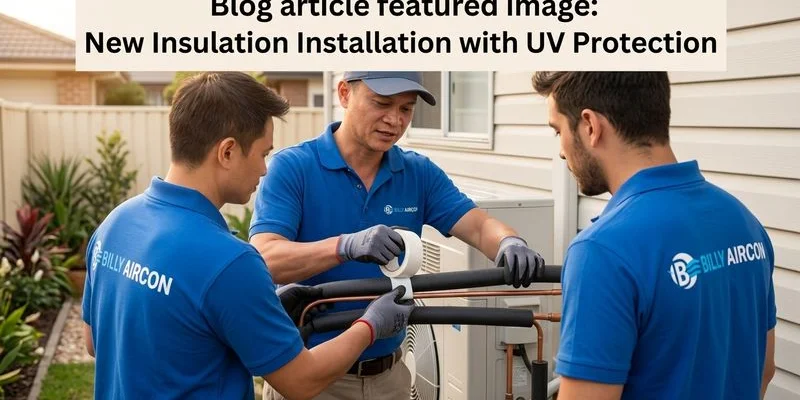
Fresh, 13mm thick closed-cell tubing is slid over the clean copper. The technician seals every single joint with specialized adhesive and heavy-duty tape to eliminate air gaps.
We secure the entire run with spaced cable ties, ensuring no one squeezes the foam too tightly.
4. UV Protection for Outdoor Sections
Exposed exterior runs receive a specialized wrap. The technician binds the foam in a UV-resistant protective sleeve or aluminum tape.
Our testing shows this single step effectively doubles the lifespan of outdoor materials in Singapore.
Cost of Insulation Replacement in Singapore
Investing in a proper replacement is surprisingly affordable compared to fixing severe water damage.
| Service Type | Estimated Cost (2026) | Recommended Material / Notes |
|---|---|---|
| Pipe insulation replacement (per unit) | $80 to $150 | 1/2-inch (13mm) Armaflex or Superlon |
| Insulation for extended pipe run (per metre) | $10 to $20 | Use continuous lengths to avoid joints |
| UV protective wrapping | $20 to $40 | Essential for all HDB exterior ledges |
| Full re-insulation during installation | Usually included | Verify BCA-certified installer |
We know these minor costs prevent massive headaches down the road. Ignoring a crumbling sleeve guarantees increased electricity usage and eventual plaster repair bills.
DIY vs Professional Replacement
Handy property owners can handle very small, accessible sections themselves.
You can manage the repair yourself if:
- The split is on a straight, easily reached indoor line.
- You can buy pre-slit, 13mm diameter elastomeric tubing.
- The damaged area requires zero UV protection.
Call a certified professional if:
- The problem is located on a dangerous exterior ledge.
- Multiple long sections are crumbling at once.
- The lines are hidden inside sealed PVC trunking.
- You suspect the underlying copper is already leaking gas.
Our safety policy strictly follows HDB and BCA guidelines regarding exterior facade work. Only certified technicians should ever lean out of a window to service outdoor compressor connections. If you try a DIY fix indoors, use proper adhesive tape and ensure absolutely zero gaps are left behind.
Insulation and Energy Savings
The financial impact of a well-sealed system is highly measurable. Singapore’s massive temperature difference between cold 5°C refrigerant and 32°C ambient air causes aggressive thermal loss.
Consider the daily efficiency of a standard residential split unit with a 3-metre pipe run:
- Perfectly insulated pipes: Zero thermal loss, allowing the compressor to hit the NEA-recommended 25°C efficiently.
- Partially damaged sections: A 5% to 10% drop in total cooling capacity.
- Missing or ruined sleeves: A massive 15% to 20% efficiency loss.
We constantly remind clients to look at the long-term math. Operating with a 20% efficiency penalty easily wastes $100 to $200 in excess electricity over twelve months. Fixing the sleeve literally pays for itself in less than a year.
Check Your Insulation Today
Take five minutes right now to walk along your visible trunking. Feel the foam covering to check if it is soft and pliable or hard and brittle.
Look closely for deep cracks, separated joints, or brown water stains on the wall directly beneath the run.
“Our experience shows that catching these minor defects early saves property owners thousands of dollars in secondary water damage.”
Updating your foam is the most cost-effective maintenance task you can perform to stop condensation, lower your SP Group bill, and shield your expensive copper from destructive rust.
If you spot any of the warning signs discussed in our guide to Aircon Insulation: Why It Matters & Signs of Damage, do not wait for a leak to start.
Need your aircon insulation checked or replaced? WhatsApp Billy Aircon at +65 9187 4498 for a professional assessment.