You know how quickly a small condensation leak can turn into a massive headache in our tropical climate. From my perspective, that constant moisture is the real reason air conditioning units become a magnet for unwanted guests. We have seen this happen repeatedly since Billy Aircon was founded in 2003. Starting with just five people offering aircon servicing in Singapore and growing to a dedicated team of 26, our mission has always been to keep Singapore cool and pest-free. The dark and moist environment inside your indoor unit provides the perfect shelter for cockroaches, lizards, and ants.
Pest infestations inside your cooling system go far beyond a simple nuisance. These intruders can cause real damage to the internal components and severely affect the air quality in your home. Repairs for this kind of damage are often surprisingly expensive.
Let us look at the data to understand this issue clearly. I am going to break down exactly how to protect your aircon from pests in Singapore and share the exact workarounds our technicians use daily.
Why Pests Love Your Aircon
Understanding the specific attractants is your first step in keeping intruders out.
Moisture
Air conditioning units produce condensation as a natural byproduct of cooling the warm air. A standard 9,000 BTU bedroom unit in Singapore can generate over a litre of water per hour due to our high humidity levels.
This moisture collects in the drainage pan and flows out through the drainage pipe.
For pests living in our climate, this consistent water source is absolutely irresistible. Cockroaches can survive for weeks without a food source but will die in just a few days without water. We regularly find that a slightly blocked drainage pipe creates the perfect watering hole for these insects.
Darkness
The inside of your cooling unit is completely dark and enclosed. This creates exactly the kind of environment that nocturnal creatures prefer.
The indoor unit housing provides excellent shelter from daylight and household predators. Pests can hide undisturbed within the casing during the day.
Warmth
While the evaporator coils get very cold during operation, the electrical circuit boards and motors generate significant heat. When you turn the power off, the residual warmth combines with the internal moisture to create a cosy incubator.
We often spot pest nests huddled right next to the warm printed circuit board (PCB) casing.
Access Points
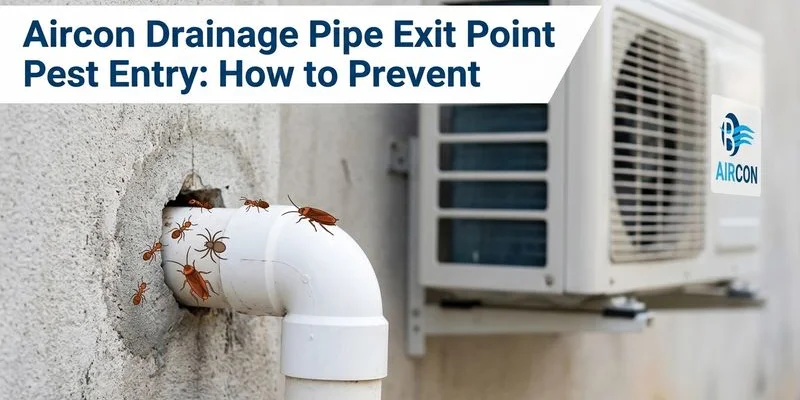
The standard 16mm PVC drainage pipe serves as the primary entry point for most insects. This pipe runs directly from your indoor unit to the exterior of the building.
If the installer did not fit the pipe with a proper U-trap, pests simply crawl straight up the tube. Gaps in the concrete wall where the copper piping passes through provide another very common highway for insects.
Common Pests Found in Aircon Units
Cockroaches
Cockroaches are the most frequent intruders we extract from cooling systems across the island. The German cockroach, measuring about 1.1 to 1.6 centimetres, is highly adaptable and notoriously resistant to many common pesticides.
These insects are drawn to the moisture and darkness provided by the internal drainage system.
Watch out for these clear signs of a cockroach infestation:
- Small dark droppings that look like pepper flakes around the casing
- A distinctive musty or oily smell when you turn the fan on
- Dead bugs falling from the blower wheel during startup
- Egg casings attached to internal plastic components
Lizards (Geckos)
The Asian House Gecko frequently enters cooling systems through the external drainage pipes or poorly sealed wall gaps. They climb inside because they are hunting the smaller insects that already live in the moisture tray.
You can identify a lizard problem by looking for these indicators:
- Droppings featuring a small white tip located directly below the unit
- Strange scratching or chirping noises coming from the plastic housing
- Foul odours caused by a lizard getting trapped and dying near the coils
Lizards cause surprising amounts of mechanical damage. They occasionally get caught in the spinning fan blower, which breaks the delicate plastic blades and jams the motor completely.
Ants
Ant colonies sometimes set up their nests inside the outdoor condenser casing. Ghost ants and Pharaoh ants are particularly common in Singapore and love the sheltered warmth of these metal boxes.
A large ant colony can create serious operational problems.
- They build nest material that blocks the critical drainage holes
- The acid they produce strips the insulation off electrical wiring
- They swarm and jam up the mechanical relay switches
Other Pests
Our technicians occasionally encounter other problematic creatures during routine maintenance.
- Mosquitoes: Aedes mosquitoes will breed rapidly in the stagnant water of a clogged drainage pan.
- Spiders: They build thick webs across the vents that restrict proper airflow.
- Rats: Roof rats rarely get inside the indoor unit but often chew through the thick insulation of outdoor compressor wiring.
How Pests Damage Your Aircon
The damage from these infestations goes far beyond a simple hygiene issue.
Electrical Damage
Cockroaches and ants regularly cause short circuits by crawling across live electrical contacts. PCB damage from insect activity is a repair job our team handles on a weekly basis.
Recent 2025 and 2026 data shows that replacing a burnt PCB in Singapore typically costs between $350 and $900, depending on your specific brand. Investing in basic physical barriers is infinitely cheaper than replacing the brain of your cooling system.
Drainage Blockages
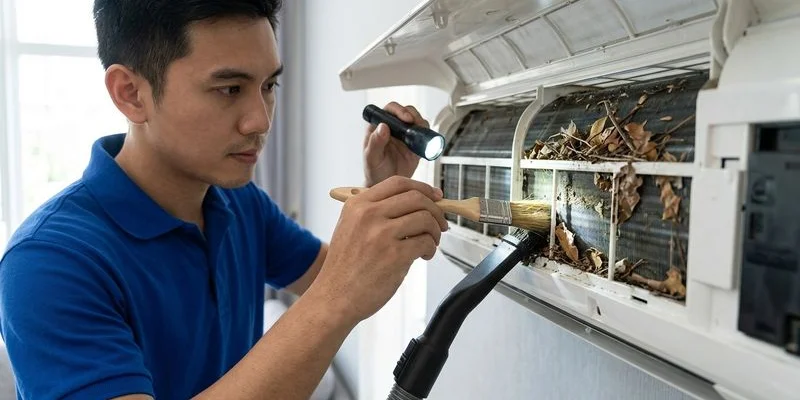
Dead insects, accumulated droppings, and thick nest material easily clog the narrow PVC drainage pipes. This blockage causes the condensation to back up and overflow directly from the indoor unit onto your floor.
Water damage ruins expensive wallpaper, warps parquet flooring, and destroys plasterboard ceilings.
Health Hazards
Shed insect skins, dried droppings, and decomposing bodies sit right in the path of your chilled air. The blower wheel circulates these microscopic particles through your bedroom every single time you turn the power on.
This constant exposure triggers severe allergic reactions and is a well-known cause of asthma attacks. The National Environment Agency (NEA) also takes stagnant water very seriously to prevent dengue outbreaks.
If NEA inspectors find mosquito larvae breeding in your clogged condensation tray, you can face a direct fine of $200 for a single habitat.
Mechanical Damage
Lizards caught in the high-speed fan blower will instantly snap the plastic blades. This throws the entire roller off balance and causes the unit to vibrate loudly against your wall.
Repairing a broken fan blower or replacing a burnt-out fan motor costs between $150 and $300 today.
Prevention: How to Keep Pests Out
1. Seal Entry Points
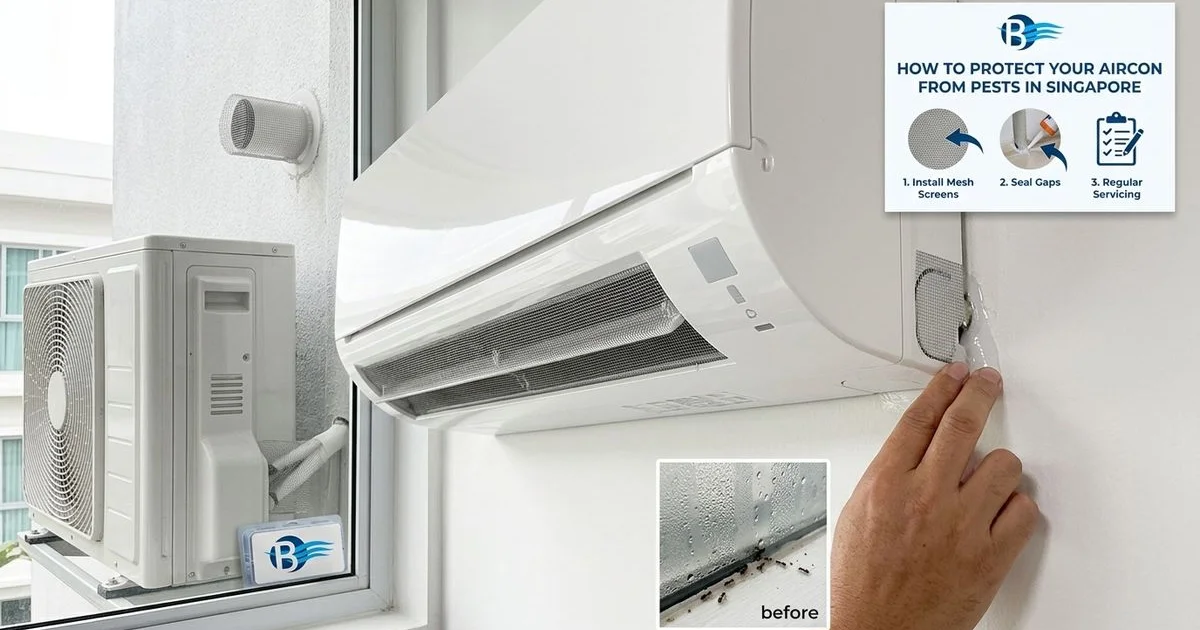
The most effective long-term prevention strategy relies on solid physical barriers.
- Install a drainage pipe trap: A proper U-shaped trap holds a small amount of water that stops insects from crawling up the pipe.
- Seal wall gaps: Apply waterproof silicone sealant or expanding polyurethane foam to close the holes where copper pipes pass through the concrete.
- Check the outlet: Ensure the final drainage pipe outlet hovers above the drain grate rather than resting flat on the ground.
2. Maintain the Drainage System
Stagnant water attracts thirsty insects and provides the perfect breeding ground for dangerous mosquitoes.
- Schedule regular flushing: Have a professional use a wet vacuum to clear the jelly and dirt from your pipes every three months.
- Run the fan regularly: Turn on the system for 20 minutes a week in unused guest rooms to keep the internal traps wet.
- Clean the pan: Ask your technician to physically wipe down the condensate tray during every routine service call.
3. Keep the Surrounding Area Clean
Insects usually approach your cooling equipment because they found a food source nearby.
- Clear the bedroom: Do not store open snacks or sweet drinks near the indoor blower unit.
- Sweep the balcony: Remove dead leaves, loose debris, and empty plant pots from around your outdoor compressor.
- Trim nearby plants: Overgrown balcony vegetation provides an excellent bridge for ants to march right into the metal casing.
4. Use Natural Deterrents
Certain natural scents repel insects without damaging the sensitive copper coils.
- Peppermint oil: Placing a few drops of pure peppermint oil on a cotton ball near the return air vent repels both ants and roaches.
- Bay leaves: Tucking a few dried bay leaves on top of the plastic casing creates a smell that cockroaches actively avoid.
- Citronella: Spraying citronella around the balcony floor keeps mosquitoes away from the compressor area.
You must never spray commercial insecticide directly onto the indoor fins or plastic casing. The harsh chemicals will immediately corrode the copper evaporator coils and contaminate the air you breathe.
We always advise calling a professional if you spot a severe nest deep inside the machine.
5. Regular Professional Servicing
Consistent maintenance remains your best defence against an expensive insect-related breakdown.
A qualified technician will thoroughly execute these steps:
- Wash out all acidic droppings and corrosive debris from the plastic chassis
- Inspect the hidden back tray for early warning signs of cockroach activity
- Vacuum the entire PVC drainage line to ensure water flows rapidly
- Highlight specific gaps in your trunking that require fresh silicone sealant
What to Do If You Already Have Pests in Your Aircon
Finding a family of cockroaches living inside your bedroom unit is highly distressing. Follow these exact steps if you spot intruders.
Step 1: Turn Off the Power Immediately
Do not let the system continue running. The spinning blower wheel will immediately suck up dried droppings and bacteria, blowing those hazardous allergens directly into your face.
Step 2: Avoid DIY Cleaning Attempts
Grabbing a flashlight and a can of bug spray is incredibly tempting. You should strongly resist this urge for several reasons.
Opening the plastic casing without proper training exposes you directly to concentrated allergens. Spraying chemicals will just push the surviving insects deeper into the electrical control box.
Step 3: Book a Deep Chemical Wash
A thorough chemical wash provides the absolute most effective way to eliminate heavy contamination. We rely on alkaline-based solutions to break down the sticky residue that insects leave behind.
This specialised process delivers several critical benefits:
- It neutralises the harmful bacteria and dangerous mould spores growing on the droppings
- High-pressure water jets flush the dead bodies and thick nest material completely out of the drainage pan
- The foaming chemical deeply sanitises the tightly packed aluminium evaporator coils
For extremely severe cases, the technician will recommend a full chemical overhaul. This requires dismantling the entire machine to clean every single part individually and check the main circuit board for bite marks.
Step 4: Seal the Discovered Entry Points
Your technician must identify exactly how the insects got inside after completing the wash.
Applying fresh silicone to wall gaps or installing a new pipe trap is absolutely critical. The pests will simply return the following week if you skip this physical sealing step.
Step 5: Establish a Strict Maintenance Schedule
The smartest way to prevent a second invasion is to book servicing every three to four months.
Consistent cleaning prevents the condensation jelly from building up and blocking the water flow. Check our servicing prices for affordable quarterly maintenance plans. We find that regular quarterly maintenance keeps the internal environment far too clean and hostile for insects to settle down.
Special Considerations for HDB Flats
Living in a high-rise HDB flat presents a few unique challenges for pest control.
- Shared drainage systems: Many older HDB blocks feature common internal pipes where condensation lines from multiple floors merge together. Insects easily commute from a dirty unit directly up into your clean bedroom.
- Bin centre proximity: Flats located on the lower floors near the main rubbish chute face a constant battle with the larger American cockroaches.
- Corridor placements: Condenser boxes mounted along the common walkway provide incredibly easy access for wandering rodents and ants.
If your HDB unit suffers from repeating infestations, you should contact your local Town Council immediately. They are responsible for fogging the common rubbish chutes and ensuring the shared external drainage pipes remain clear of blockages.
When Pest Damage Requires Repair
Sometimes an insect problem goes unnoticed until the machine completely stops working. Cleaning the system is no longer enough when physical parts fail.
Here are the current 2025 and 2026 estimated costs for repairing common insect-related damage in Singapore:
| Repair Type | Typical SG Cost | Common Pest Cause |
|---|---|---|
| PCB Replacement | $350 - $900 | Cockroach or ant short circuit |
| Fan Motor Replacement | $150 - $300 | Lizard jamming the blower wheel |
| Drainage Pipe Replacement | $80 - $150 | Severe nest blockage or acid corrosion |
| Wiring Insulation Repair | $100 - $200 | Rat or cockroach chewing damage |
These expensive part replacements are entirely avoidable. Investing in preventative sealing and routine quarterly washing saves you hundreds of dollars in the long run.
Keep Your Aircon Pest-Free
Insects and sensitive electrical cooling equipment are a disastrous combination. A tiny amount of proactive prevention physically protects your expensive machine, your family’s respiratory health, and your bank account.
You must seal the wall gaps, keep the condensation pipes clear, and commit to a quarterly professional cleaning schedule.
If you suspect intruders are hiding in your system or want to schedule a preventative chemical wash, reach out to us right now on WhatsApp Billy Aircon. Our team deals with these exact problems every single day and will get your equipment permanently sealed and sanitised.