Why Is Your Aircon Leaking Water?
An aircon leaking water is one of the most common and urgent problems Singapore homeowners face. Unlike a gradual reduction in cooling performance that you might tolerate for a few days, water dripping from your aircon unit demands immediate attention. Left unchecked, a leaking aircon can damage your walls, flooring, furniture, and electronics. It can cause mould growth that spreads behind walls, create unsightly water stains on ceilings, and even pose electrical safety hazards.
The good news is that most aircon water leaks are caused by preventable and repairable issues. With professional aircon servicing in Singapore, most leaks can be prevented entirely through regular maintenance. Understanding what is happening inside your aircon when it leaks helps you respond appropriately — and helps our technicians fix the problem faster when they arrive.
First, it helps to understand why your aircon produces water at all. When warm, humid air from your room passes over the cold evaporator coil, moisture in the air condenses on the coil surface — the same way water droplets form on the outside of a cold drink on a hot day. In Singapore’s extremely humid climate, your aircon can produce litres of condensate water every day. This water normally collects in the drain pan beneath the evaporator coil and flows out through a drain pipe to the building’s drainage system. When any part of this drainage pathway is blocked or compromised, water overflows from the drain pan and leaks into your room.
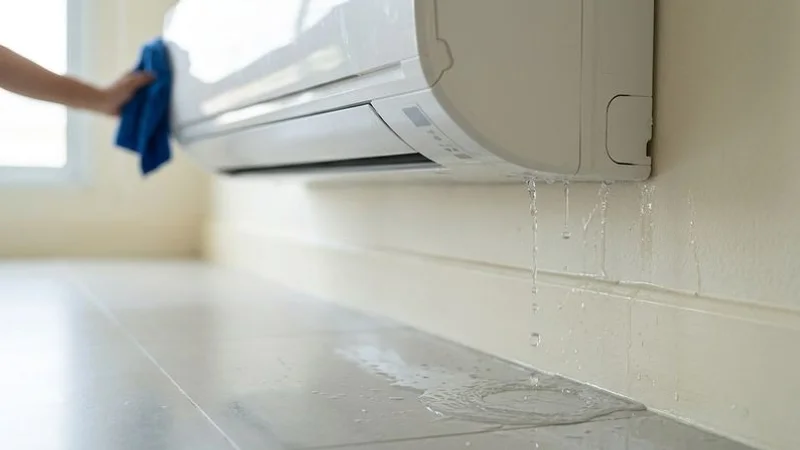
Cause 1: Clogged Drain Pipe
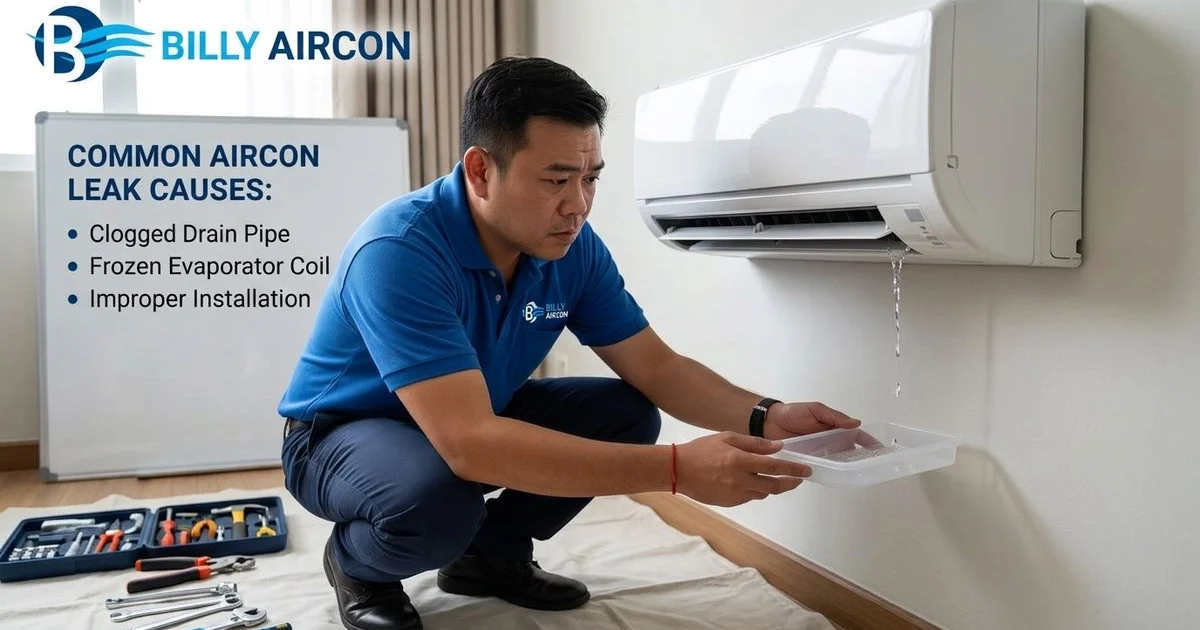
This is the number one cause of aircon water leaks in Singapore, responsible for over 60% of all leak cases we attend. The condensate drain pipe carries water from the drain pan to the building’s drainage point. Over time, this pipe accumulates slime, algae, dust, and debris. In Singapore’s warm and humid conditions, biological growth inside the drain pipe is inevitable.
As the blockage builds up, water flow slows down. Eventually, the pipe becomes fully clogged, and water backs up into the drain pan. Once the pan overflows, water drips from the indoor unit — typically from the front or side of the unit and often down the wall.
How to recognise this cause:
- Water drips steadily from the front or side of the indoor unit
- The dripping gets worse when the aircon has been running for several hours
- Cooling performance may still be normal — the aircon blows cold air but also leaks water
- The problem often starts gradually and worsens over weeks
Our fix: We flush the drain pipe using pressurised water or a specialised vacuum device to clear the blockage completely. We also clean the drain pan, which often has its own layer of slime contributing to the problem. In severe cases where the pipe is extremely clogged or has sagged over time (creating a dip where water and debris collect), we may need to reposition or replace a section of the drain pipe.
Prevention: Regular aircon servicing every 3 to 4 months includes drain pipe flushing, which prevents blockages from building up to the point where they cause leaks. This is one of the most important reasons to maintain a regular servicing schedule.
Cause 2: Dirty Air Filters and Evaporator Coil
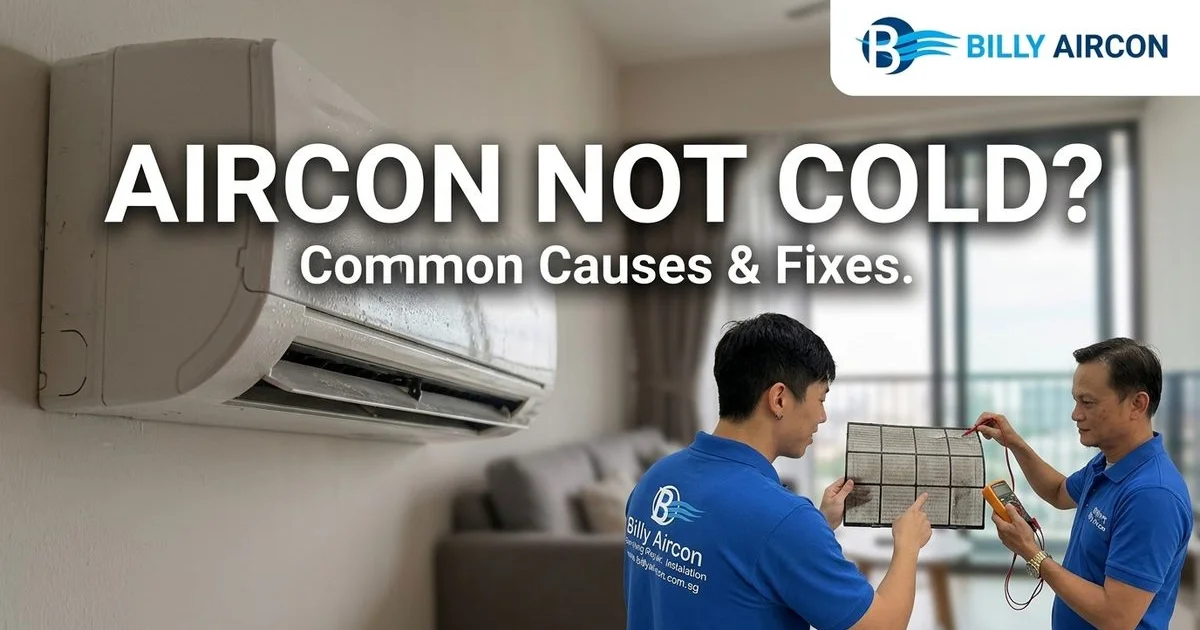
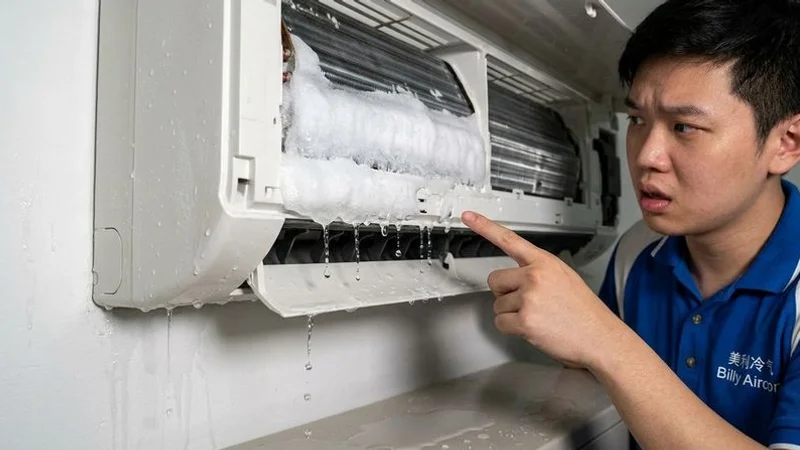
Heavily clogged filters restrict airflow over the evaporator coil, causing the coil temperature to drop below normal. When the coil gets too cold, condensation increases dramatically, producing more water than the drain pan can handle. Worse, the excess cold can cause moisture to freeze on the coil, forming a layer of ice.
When the aircon cycles off or when you turn it off for the night, this ice melts. The resulting water floods the drain pan and overflows, causing a sudden gush of water that can be alarming. You might come home to find a pool of water beneath your aircon or wake up to water on the floor.
How to recognise this cause:
- Large amounts of water appear suddenly, not a steady drip
- You see ice or frost on the evaporator coil or copper pipes when you open the front panel
- The leak tends to happen after the aircon has been off for a while (ice melting)
- Aircon may also be not blowing as cold as it should
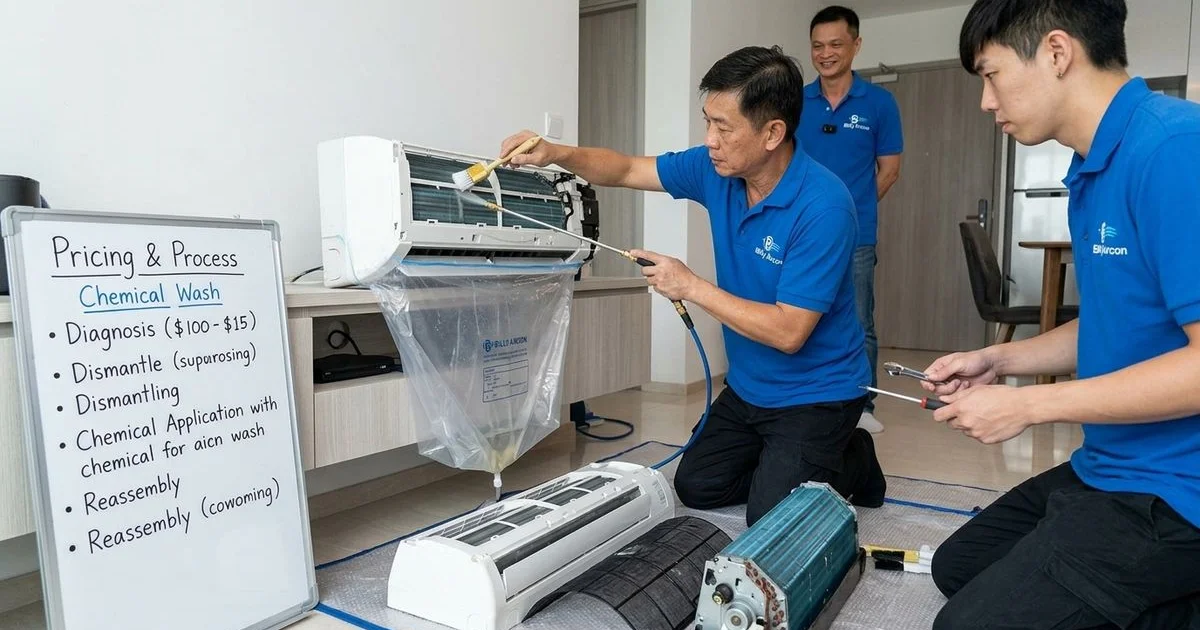
Our fix: We clean the filters thoroughly, assess the evaporator coil condition, and if needed, perform a chemical wash to remove the grime layer that is disrupting airflow. Once proper airflow is restored, the coil temperature returns to normal and excessive condensation or icing stops.
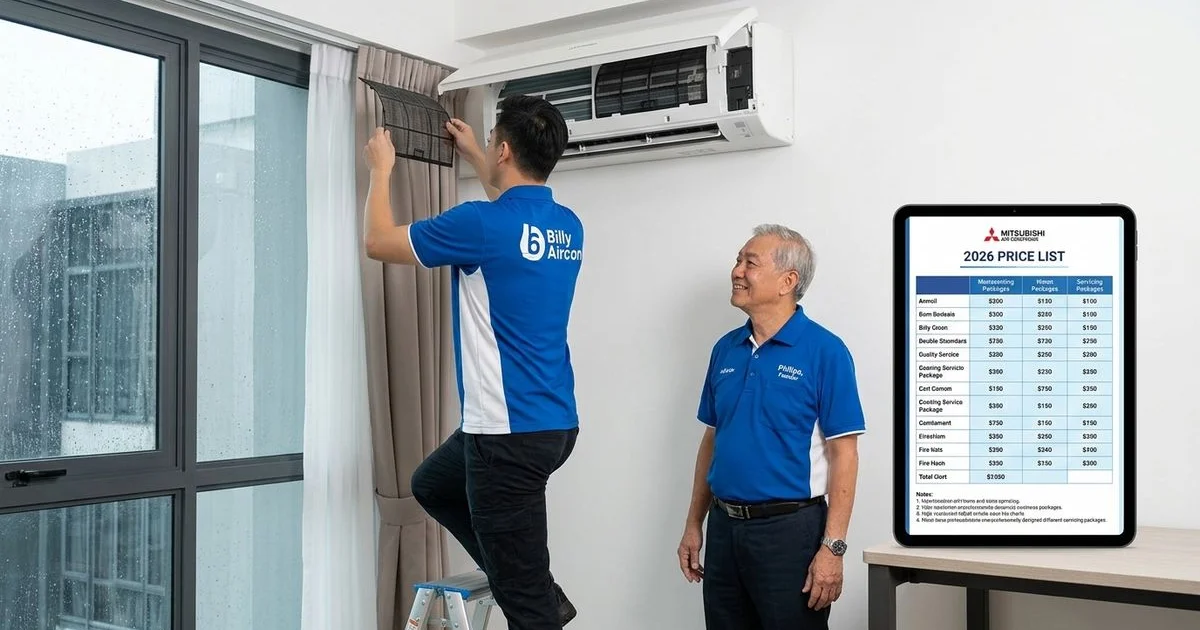
Prevention: Clean or wash your air filters every 2 to 4 weeks, or at minimum, have them professionally cleaned during regular servicing every 3 to 4 months.
Cause 3: Low Refrigerant Gas
Low refrigerant may seem like an unlikely cause of water leaks, but the physics makes it a common culprit. When refrigerant levels drop below optimal, the pressure inside the evaporator coil drops too low. This causes the coil temperature to plunge well below the normal operating range, sometimes below freezing point.
At below-freezing temperatures, condensation on the coil turns to ice. A thick layer of ice builds up over hours of operation. When the aircon is turned off or when the ice accumulates enough to block airflow entirely and the system cycles off, the ice melts and overwhelms the drain pan. The result is a large volume of water leaking from the unit all at once.
How to recognise this cause:
- Ice visible on the evaporator coil or copper pipes
- A noticeable drop in cooling performance alongside the water leak
- The aircon runs continuously without reaching the set temperature
- You may hear hissing sounds from the refrigerant leak
- Large volume of water when ice melts, not a constant drip
Our fix: We test refrigerant pressure, detect and repair any leaks, and perform a gas top up to restore the correct charge. Once refrigerant levels are restored, the coil operates at the correct temperature and icing stops. We also flush the drain to clear any debris washed down during the melt.
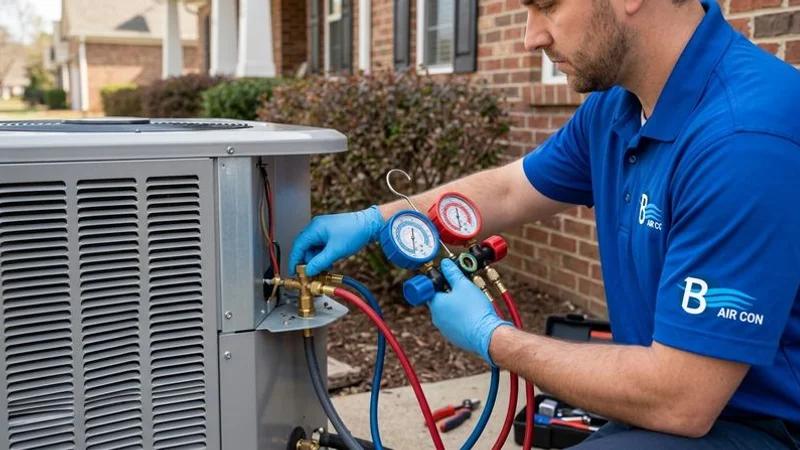
Cause 4: Installation Issues
Poor installation is a common but often overlooked cause of aircon water leaks, especially in units that have been recently installed or moved. Several installation-related factors can cause leaks:
Incorrect drain pipe gradient — The drain pipe must slope downward continuously from the drain pan to the drainage point. If any section of the pipe runs uphill or is level, water will pool at that point. Eventually, the pooling water backs up into the drain pan and overflows. Even a slight misalignment can cause problems over time as sediment collects at the low point.
Loose or disconnected drain pipe — If the drain pipe connection to the drain pan is loose, water can drip from the junction point directly into your wall cavity or onto the floor. This often happens when the unit was not properly secured during installation or when vibration over time loosens the connection.
Improper unit levelling — The indoor unit must be mounted perfectly level from side to side and with a very slight tilt toward the drain pan side. If the unit tilts away from the drain, water in the drain pan flows to the wrong side and spills over.
Inadequate insulation on piping — The cold refrigerant pipes passing through walls or ceiling spaces produce condensation on their exterior surface if not properly insulated. This condensation drips and can appear as a water leak from the unit or from the wall where the pipes pass through.
How to recognise installation-related leaks:
- Leak started soon after the aircon was installed or moved
- Water drips from behind the unit or from the wall rather than from the front
- Water appears at the pipe entry point in the wall
- The leak is present even when the drain pipe is clear
Our fix: We inspect the installation for gradient issues, loose connections, and improper levelling. Corrections may involve repositioning the drain pipe, securing connections, relevelling the indoor unit, or adding insulation to piping. If the installation was done by another company, we can still rectify the issues.
Cause 5: Cracked or Overflowing Drain Pan
The drain pan sits beneath the evaporator coil and collects all condensate water before channelling it to the drain pipe. Over many years of use, the drain pan can crack due to thermal stress (repeated expansion and contraction as the unit heats up and cools down). A cracked pan allows water to bypass the drain pipe and leak directly from the unit.
Additionally, if the drain pan is not cleaned during regular servicing, slime and sediment accumulate in the pan. This reduces its effective capacity and can block the drain outlet, causing the pan to overflow even when the drain pipe is clear.
How to recognise this cause:
- Water drips from the bottom of the indoor unit, not the front or side
- The leak is constant whenever the aircon runs
- Cleaning the drain pipe does not resolve the leak
- The aircon is older than 7 to 8 years
Our fix: We inspect the drain pan for cracks, corrosion, and sediment buildup. Minor cracks can sometimes be sealed, but a severely damaged pan may require replacement. We always clean the drain pan during servicing to prevent overflow due to sediment buildup.
Cause 6: Frozen Evaporator Coil (Multiple Triggers)
We have mentioned ice formation in the context of dirty filters and low gas, but it deserves its own section because it is such a common direct cause of significant leaks. Any condition that causes the evaporator coil to drop below 0°C can lead to ice formation. When the ice melts, the resulting water often exceeds the drain system’s capacity.
Conditions that cause ice formation:
- Low refrigerant gas (reduced pressure lowers coil temperature)
- Severely clogged filters (reduced airflow means less heat reaching the coil)
- Dirty evaporator coil (insulating layer prevents heat absorption)
- Faulty fan motor (fan runs too slow or stops, reducing airflow)
- Thermostat set too low in a small room (coil overcools)
- Running the aircon when outdoor temperature drops below 20°C (rare in Singapore but possible during cooler months)
Our fix: We identify the root cause of the ice formation and address it. Simply defrosting the ice without fixing the underlying cause means the ice will return.
How Urgent Is an Aircon Water Leak?
An aircon water leak should be treated as an urgent issue that requires prompt attention. Here is why:
Water damage to your home — Water running down walls causes paint peeling, plaster damage, and unsightly stains. On ceilings, water spreads and can affect the unit directly below in HDB flats and condos. Repeated water exposure damages parquet, laminate, and vinyl flooring. Wooden furniture and cabinetry near the leak can warp.
Mould growth — Singapore’s warm, humid environment is ideal for mould. Water from a leaking aircon that seeps behind walls or into ceiling spaces creates mould colonies that spread rapidly. Mould produces spores that affect indoor air quality and can trigger allergies, asthma, and respiratory infections. Removing mould from inside walls is difficult and expensive.
Electrical hazards — Water and electricity are a dangerous combination. If leak water reaches electrical outlets, wiring, or the aircon unit’s own electrical components, it creates a risk of short circuits, equipment damage, and potentially fire or electric shock.
Damage to the aircon itself — Ignoring a leak caused by low gas or ice formation leads to compressor damage, which is the most expensive repair. A $50 drain flushing today can prevent a $400 to $1,200 compressor replacement later.
Liability to neighbours — In HDB flats and condos, water leaking from your aircon can damage the unit below yours. You may be held responsible for repair costs to your neighbour’s property. Prompt repair protects you from this liability.
What to Do When Your Aircon Leaks
Immediate steps:
-
Turn off the aircon — This stops condensation production and prevents further water accumulation. If ice is present, letting it melt with the unit off is safer than continuing to run it.
-
Place towels or a container — Catch dripping water to prevent it from spreading across the floor or running down walls.
-
Move electronics and valuables — Get laptops, speakers, books, and other items away from the leak area.
-
Check the obvious — Open the front panel and check if the filters are clogged. If they are heavily dirty, washing them and letting them dry might resolve the issue.
-
Do not attempt to dismantle — Unless you are trained, do not try to access the drain pan or drainage system. Improper handling can worsen the leak or damage the unit.
-
Call Billy Aircon — Our technicians can often attend to urgent leaks on the same day.
Our Leak Repair Process
Step 1 — Visual inspection: We check the indoor unit for visible signs of water, ice, and dirt. We identify exactly where the water is coming from — the drain pan, pipe connections, or ice melt.
Step 2 — Filter and coil check: We remove and inspect filters and assess the evaporator coil condition. Heavy dirt or ice formation is noted.
Step 3 — Drain system test: We test the drain pipe flow by pouring water into the drain pan and observing drainage speed. Slow or no drainage confirms a blockage.
Step 4 — Drain pipe flushing: Using pressurised water or vacuum equipment, we clear the drain pipe completely. We flush until water flows freely and cleanly.
Step 5 — Refrigerant check: If ice formation is present, we check refrigerant pressure to determine whether low gas is a contributing factor.
Step 6 — Installation inspection: We verify unit levelling, drain pipe gradient, and pipe insulation. Any installation defects are corrected.
Step 7 — Testing: We run the aircon for at least 20 minutes and verify that no water accumulates in or around the drain pan. We confirm proper drainage by checking the flow at the drain outlet.
Frequently Asked Questions
How much does it cost to fix a leaking aircon? Most leak repairs cost between $50 and $100 for drain flushing and cleaning. If the cause is low gas, add the gas top up cost ($50 to $200). If a chemical wash is needed, add $80 to $180. Drain pan replacement or pipe repositioning costs vary by unit and difficulty. We always quote before proceeding.
Can I fix the leak myself? You can clean the air filters yourself, which may resolve leaks caused by clogged filters. However, drain pipe flushing, refrigerant checks, and installation corrections require professional tools and expertise. Attempting DIY drain clearing with wire or compressed air can damage the pipe or push debris further into the system.
My aircon leaks only at night. Why? If you run your aircon primarily at night for sleeping, the unit produces condensation for 6 to 8 continuous hours. A partially clogged drain pipe may handle the water flow for the first few hours but eventually backs up, causing a leak in the early morning hours. A thorough drain flush resolves this.
I just had my aircon serviced but it still leaks. Why? If the drain blockage is deep within the pipe (beyond the access point used during standard servicing), a regular flush may not clear it fully. A more aggressive clearing using vacuum equipment or a chemical flush may be needed. Also, if the leak is caused by installation issues or low gas, standard servicing alone will not fix it.
Is it normal for an aircon to produce water? Yes. Your aircon produces condensate water every time it runs — this is normal. In Singapore’s humidity, a single unit can produce 1 to 2 litres of water per hour. The key is that this water should drain away through the drain pipe, not leak into your room. If you see water outside the drain system, there is a problem.
How often should I flush the drain pipe? Every 3 to 4 months as part of regular servicing. In Singapore’s humid conditions, biological growth in the drain pipe is constant. Regular flushing prevents blockages before they cause leaks.
Stop the Leak Before It Causes Damage
An aircon water leak is your system telling you something is wrong. The sooner you address it, the less damage to your home and the lower the repair cost. Most leaks are caused by simple drain blockages that take our technicians 30 to 45 minutes to resolve.
WhatsApp us at +65 9456 5942 to book an urgent leak repair. Same-day service available for morning bookings. We respond to all messages within the hour. Serving all HDB flats, condos, and landed properties across Singapore.